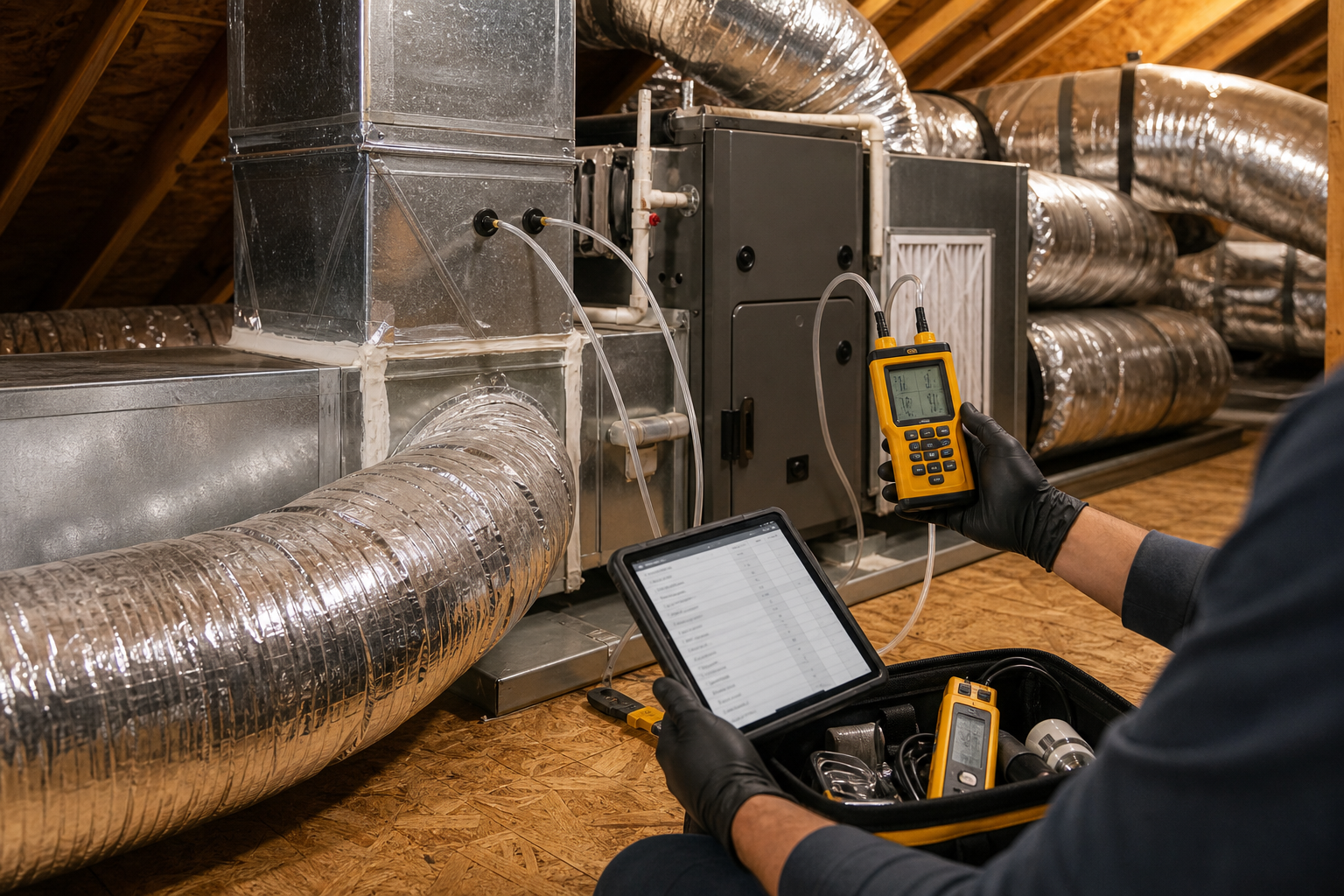
Cali HVAC is a Los Angeles HVAC installation brand focused on heat pumps, central AC replacement, ductless systems, rooftop units, ductwork, filtration, controls, and premium multi-zone systems. The differentiator is not a bigger promise. It is a stronger closeout.
We write scopes around what can be verified: load assumptions, airflow, access, equipment match, startup readings, filter fit, control settings, warranty status, and owner instructions. That approach is slower than a one-line equipment quote, but it is better aligned with how homes actually fail.
The voice of the company is precise, direct, and practical. We do not pretend every project needs the most expensive brand. We also do not pretend a cheap install is a bargain if the contractor cannot explain how the system will be measured after startup.
The operating belief
Installed outcome, not equipment-only sales
A homeowner is not buying a condenser, an air handler, or a wall cassette in isolation. The homeowner is buying a finished comfort outcome inside a specific Los Angeles building. That means the real product includes the installed equipment, the surrounding duct or line-set conditions, the control setup, the filter path, the startup readings, and the record that explains the work after the crew leaves.
Los Angeles makes that discipline necessary. A Pasadena attic, a Venice roof, a Woodland Hills heat pump conversion, a West Hollywood condo, a Beverly Hills owner-rep project, and a Long Beach coastal replacement are not the same job. The equipment brand may repeat, but the proof changes. The site is built to make those differences visible at the page level instead of burying them in one broad service claim.
What we are optimizing for
Audit trail before, during, and after startup
The first priority is installation quality that can be audited. We want every major proposal to say what will be checked before install day, what will be photographed during the job, which readings should be recorded at startup, which assumptions could still limit the result, and what the homeowner should keep for warranty, maintenance, rebate, permit, and future service questions.
The second priority is a better buying conversation. Many HVAC estimates look similar because they list tonnage, brand, and price, then skip the building conditions that decide whether the new system feels better. We want homeowners to compare scopes by proof: static pressure, airflow notes, coil match, thermostat staging, condensate safety, line-set route, service clearance, filter cabinet fit, and owner training.
Where premium brands fit
Brand value depends on field conditions
Premium manufacturers matter when they match the home. Mitsubishi Electric, Daikin, Bosch, Trane, Carrier, Lennox, Fujitsu, American Standard, Rheem, Bryant, and other reputable lines can all be good choices in the right scope. They can also disappoint when duct capacity, controls, clearances, load assumptions, or installation documentation are treated as secondary details.
The brand pages on this site are written with that bias. They do not repeat brochure language. They ask which installation details make the brand perform, where the brand can be over-sold, and what proof belongs in the handoff. That is the difference between brand admiration and installed accountability.
The standard for content on this site
Long-tail pages need real homeowner decisions
Every important page should answer a real long-tail question: city plus service, brand plus service, city plus proof, or homeowner problem plus commissioning checklist. The content should identify the local constraint, explain the service decision, state the proof points, and give the homeowner a practical way to judge a bid. If a page does not do that, it risks becoming doorway content and should be improved or removed.
That standard is intentionally demanding because organic traffic is only valuable when it converts into serious consults. Thin pages may get indexed, but they do not build trust. The better path is to publish pages that answer answer-engine questions, search-engine questions, and homeowner questions with the same discipline: concrete language, visible evidence, and a conversion path to booking or calling.
Who is a strong fit for this approach
Best fit: owners who want documented scope
The best fit is a homeowner, owner representative, builder, architect, property manager, or remodel lead who wants the HVAC scope written clearly before the job starts. That person may be comparing two premium bids, deciding whether to switch from gas heat to a heat pump, adding ductless comfort to an ADU, replacing a rooftop unit under access pressure, or trying to solve a room problem that previous equipment changes never fixed.
The weak fit is someone who only wants the fastest number with no site context. We can still be useful, but the brand is not built around guessing. It is built around identifying constraints, documenting decisions, and making sure the final installation leaves enough evidence for the next person who has to maintain, service, sell, rent, remodel, or audit the property.
That is also why the site reads more like a field manual than a coupon page. The commercial goal is still clear: turn serious organic traffic into booked consults. The way to do that is not louder claims. It is specific proof language that makes the call feel worth taking.