How a Heat Pump Install actually gets installed in LA
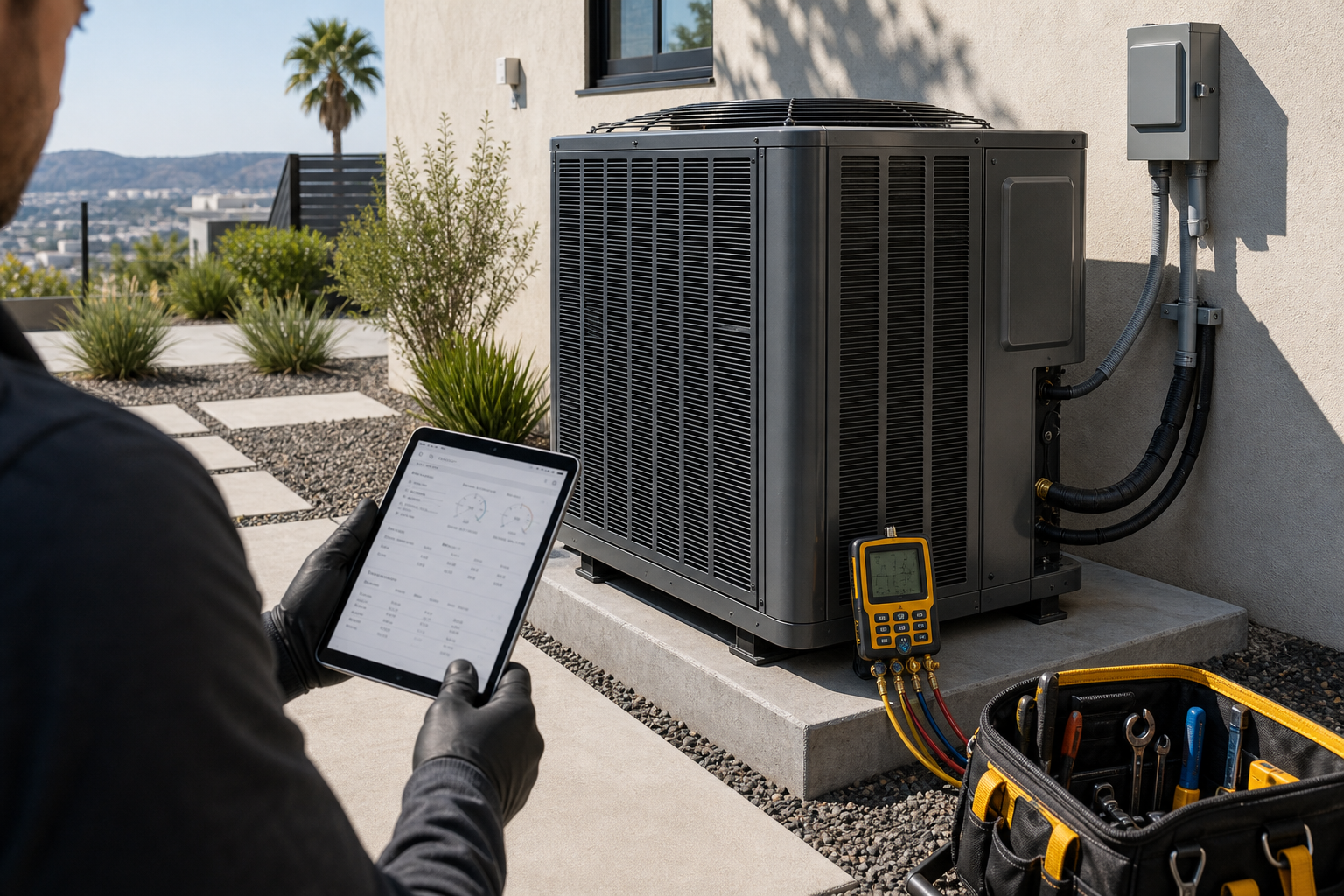
Heat pump installs in Los Angeles live or die on the Manual J load calc and the AHRI matched-system certificate — skip either and the LADBS mechanical permit closeout will bounce, and LADWP will reject the Consumer Rebate Program paperwork that pays $2,500 per ton on HSPF2 ≥ 8.5 tier-2 equipment. On a typical 1,650 sqft Mar Vista bungalow with R-13 walls and single-pane west glazing I size to 30,000 BTU cooling and run a Mitsubishi MXZ-3C30NAHZ2 hyper-heat outdoor with a wall-mounted MSZ-FH12NA in the primary bedroom and a SVZ-KP18NA ducted air handler feeding the rest of the house — that combination clears 22 SEER2 and HSPF2 10.5, which is the threshold the homeowner needs to stack the LADWP tier-2 rebate with the federal 25C credit. For full-electric retrofits where the existing furnace closet is undersized I have moved to the Carrier Greenspeed 25VNA8 paired with an FV4CNF005 fan coil because the variable-speed compressor modulates down to roughly 25% capacity and avoids the short-cycling I see on single-stage 4-ton condensers in 1,400 sqft Eagle Rock houses. Every install gets pulled to 500 microns and held for 30 minutes with the micron gauge isolated from the pump, line-set brazed under nitrogen at 2 to 3 psi flow, and HERS field verification on refrigerant charge and airflow per Title 24 Part 6 §150.2(b). NEC 110.26 working clearance and NEC Article 440 disconnect placement get checked before drywall closes — that is the failure mode that kills final inspection.
A heat pump installation project performs the way load assumptions, AHRI matchup, refrigerant charge, static pressure, thermostat staging are handled. The equipment is necessary; the field discipline around it is what makes the equipment work. Cali HVAC converts those checkpoints into a written record so the homeowner has a document that describes the system rather than a brochure that describes the brand. That document is the actual deliverable.
The honest reason this service is its own category and not just an equipment line item is old ducts copied without testing, panel capacity assumed too late, oversized equipment short cycling bedrooms. Those failure points are familiar across LA's older ducts, narrow lots, rooftop installs, hillside routes, ADUs, condos, and high-end remodels. Treating them as known and pricing the work to address them is what separates a proposal that holds up after install from one that becomes a recurring service relationship for the wrong reasons.
The deliverable is practical: equipment matchup sheet, startup readings, static pressure notes, filter size and warranty handoff. We pair those items with photos, model numbers, startup readings, owner training, and any caveats about permits, rebates, warranties, or existing building limitations. The record is written so a future service technician can understand the install without guessing.
Plan for somewhere in the $7 800 to $28 500 range, with the spread driven by access difficulty, equipment tier, electrical work, duct or line work, control package, and finish protection. Lower bids can be legitimate — but they still need to include commissioning proof. A discount that arrives by skipping readings is a future expense.
Search demand for this service clusters around Los Angeles heat pump rebate, replace AC and furnace with heat pump, LADWP heat pump AHRI certificate, and ducted heat pump installation LA. The homeowner running those queries is comparing consequences, not benefits. The honest answer to whether homeowners are usually comparing gas-furnace replacement, AC replacement, panel readiness, and whether a ducted or ductless heat pump can qualify for a utility incentive is a measurement-and-documentation answer, not a marketing one.
The paperwork the homeowner should expect on a heat pump install project is AHRI match, paid invoice detail, final approved permit, SEER2/HSPF2 tier, thermostat or staging setup, and any program caveat that could change eligibility. The field measurements that should appear in the file are Manual J load assumptions, Manual S equipment fit, duct static pressure, return-air capacity, and whether the home needs dual-fuel or all-electric sequencing. Ducted systems can preserve a central layout when the duct system is healthy; ductless or short-run ducted systems can be better when old ducts cannot carry the load. That sequence is what keeps this from being a generic category page — the service is tied to an actual decision the homeowner is making, the install standard that decision implies, and the paperwork that survives permit, rebate, warranty, and future-service review.
How this service gets documented
Los Angeles proof points for Heat Pump Installation
If you are weighing a heat pump install for a Los Angeles home, the right benchmark is the closeout file, not the brochure on the truck. The conditions that decide your outcome are Spanish homes, apartments, ADUs, hillside additions, flat roofs, and mixed-age duct systems combined with marine layer mornings, valley spillover heat, smoke days, and room-by-room load swings and the everyday reality of old ducts, tight side yards, return-air limits, panel surprises, and LADBS permit sequencing. Cali HVAC writes scopes against those conditions, not around them.
Before equipment is named, the Los Angeles field walk records what the building is willing to give. Manual J load assumptions, Manual S equipment fit, duct static pressure, return-air capacity, and whether the home needs dual-fuel or all-electric sequencing. We carry that into a written assumption set so the proposal can be defended later with photos and readings, not adjectives. Around Hancock Park that often means rechecking AHRI matchup and refrigerant charge after access is opened up.
Citywide installs need a record that separates equipment performance from building constraints. So the heat pump install bid we send for a Los Angeles project is structured around proof, not promises: equipment match, route, drains, electrical, controls, and the file the homeowner keeps. A future technician should be able to read that file and understand the install without calling us.
A homeowner typing "Los Angeles heat pump install" into a search bar is usually past the brochure stage and trying to figure out what could go sideways. The honest list for this scope here includes old ducts copied without testing and panel capacity assumed too late, plus whatever the building hides until access is opened. homeowners are usually comparing gas-furnace replacement, AC replacement, panel readiness, and whether a ducted or ductless heat pump can qualify for a utility incentive. A bid that does not name those risks in writing is shifting them onto the homeowner without saying so.
Closeout documentation has one job: make the installed system legible without the installer in the room. For Los Angeles we include equipment matchup sheet, startup readings, static pressure notes, filter size and warranty handoff, plus model and serial photos, filter sizes, control settings, and a one-page operating note. If the system is a heat pump or inverter, the runtime profile is documented so the next technician knows whether the building is letting it cycle long and efficient or forcing it short.
Once the existing equipment is on the curb, the homeowner has crossed a one-way door. That is why this site is installation-first for Los Angeles: a heat pump install done sloppily compounds for years through marine layer mornings, valley spillover heat, smoke days, and room-by-room load swings and old ducts, tight side yards, return-air limits, panel surprises, and LADBS permit sequencing, and there is no quick fix once finishes are restored. The mitigation is field discipline before install day — measured, documented, and agreed in writing.